
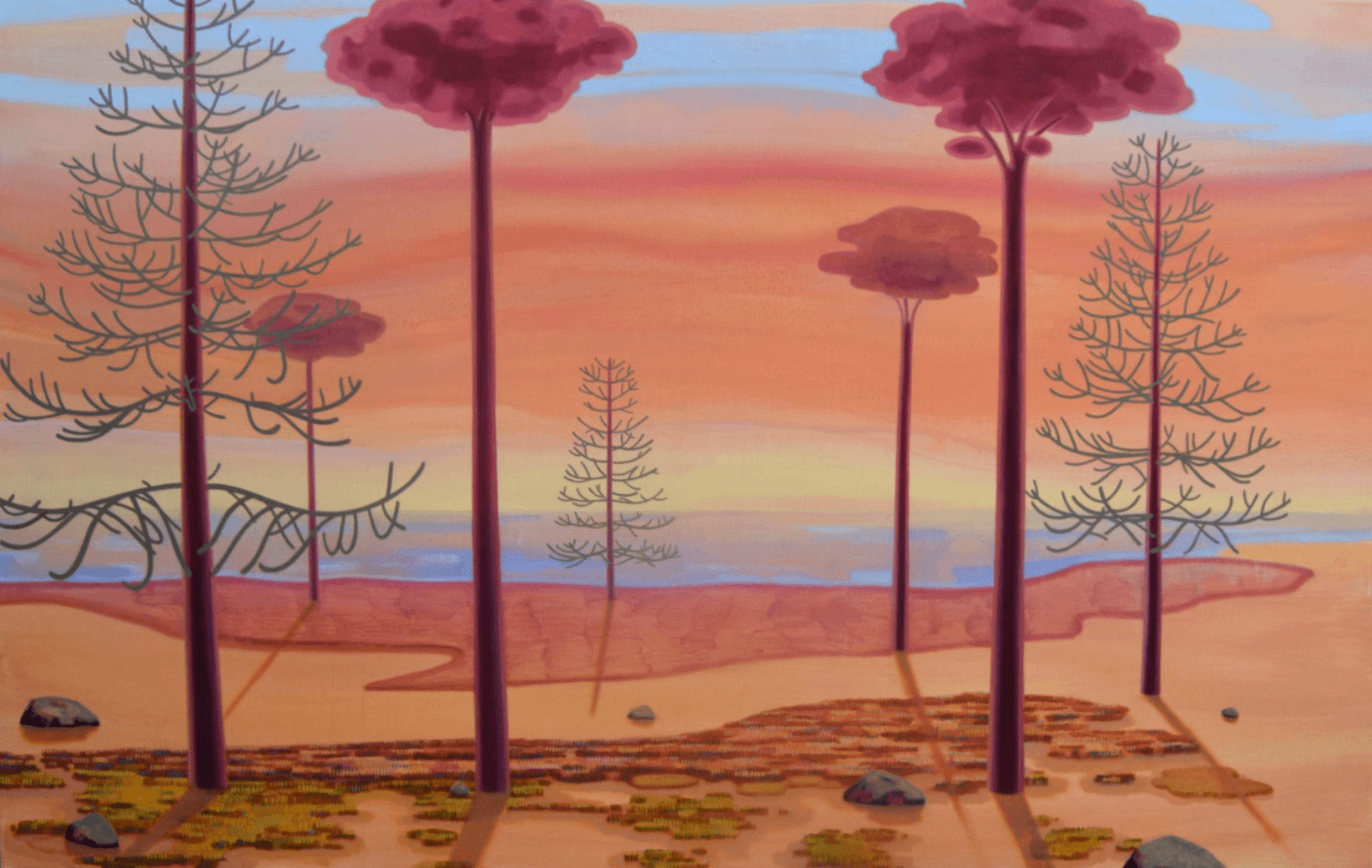
What do we place in the spaces we cannot understand?
There is a particular familiarity that can emerge from places never encountered, objects never possessed, or spaces that hold no identifiable presence. Recognition does not always depend on memory; at times, it arises from the impulse to give meaning to what remains undefined. What cannot be named or made tangible is rarely left untouched. It becomes inhabited by associations, emotions and imagined possibilities, acquiring form through the very act of interpretation.
Until it takes form brings together vessels, interiors and landscapes that occupy this threshold between the recognisable and the unknown. Emptiness becomes an active space rather than an absence, allowing memory and imagination to move across objects, architecture and the natural world. In this encounter, what belongs to the image and what originates within the viewer become increasingly difficult to separate. The desire to give shape to the intangible becomes, in turn, a reflection of how we understand and locate ourselves within the world.


By the River #1, 2023
Photography printed on speciality paper (Lens tissue)
23 x 28 cm (framed)

By the River #2, 2023
Photography printed on speciality paper (Mulberry)
23 x 59 cm (framed)

The series of artworks entitled “By the River” is designed to instigate a paradigm shift regarding the concepts of life and death. Instead of interpreting them as opposing forces, the series portrays their interdependent and transformative connection. Drawing inspiration from the Heart Sutra Prajna Paramita and the notion of “non-birth and non-destruction” elucidated in Herman Hesse's Siddhartha (1922), these pieces contemplate how the reconfiguration of the psyche can emancipate individuals from suffering and culminate in sublimation, denoting the realisation of life's interconnectedness.
By the River #6, 2023
Photography printed on speciality paper (Mulberry)
23 x 59 cm (framed)
Déjà vu #1, 2023
Photography printed on speciality paper (Lens tissue)
23 x 59 cm (framed)

Déjà vu #2, 2023
Photography printed on speciality paper (Lens tissue)
23 x 59 cm (framed)

The second series of artwork, titled “Déjà vu”, shifts its focus from existential themes to a deeper investigation of personal and temporal conceptions. This body of work serves as an intricate exploration of memory and the ephemeral nature of experience, offering a philosophical foundation for contemplation.